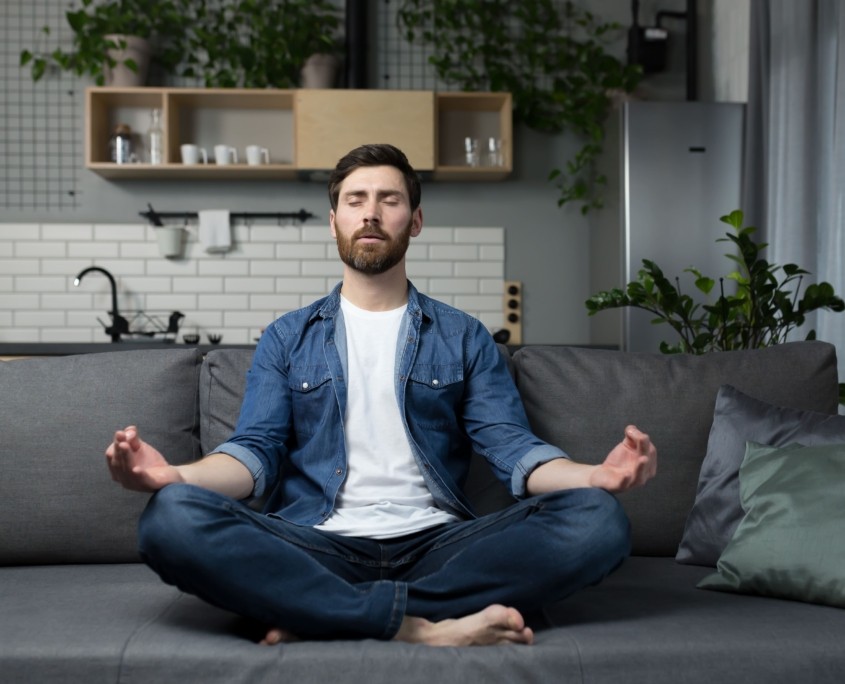

Meditation for students: Relaxation in everyday student life

Written by Kerstin Lakits, 30.04.2026

When was the last time you consciously paused in your daily student life and simply took a deep breath? It’s easy to get overwhelmed by the hectic pace of university life, and we often struggle to take intentional breaks. Multitasking may seem essential, but it often leaves us feeling exhausted or even burned out. That’s exactly why meditation is so important for students to slow down, become more mindful, and recharge your energy. In a fast-paced academic environment, it’s important to learn how to approach things at a slower pace. If you’d like to learn meditation, it can be easily integrated into your daily routine because even just a few minutes can already make a difference. In this article, we’ll show you how it works. Take a deep breath and let’s get started!

What is meditation?

Meditation is a practice that combines physical and mental techniques to bring yourself into the present moment, focus on physical sensations and thoughts, activate the parasympathetic nervous system and clear your mind.

The practice of meditation is thousands of years old and different forms of meditation have emerged from cultures all around the world. Practices can have a religious or spiritual background; however, there are also non-religious meditation practices. There is a form of meditation for everyone!

Benefits of Meditation for your Student Life

Regular meditation, even short sessions, offers a lot of different health benefits. Here are some scientifically proven advantages: 

  • Reducing stress: Meditation can be especially helpful during intense exam periods. It helps lower stress levels, keeps you calmer, and can even prevent stress-related inflammation and other physical stress reactions.
  • Improving attention span: When you have a lot to study, meditation supports your ability to stay focused and work more efficiently.
  • Better sleep: After long days at university or before exams, meditation can help you fall asleep faster and wake up feeling more rested.
  • Emotional well-being: Self-doubt and performance pressure are common during your studies. Meditation can help you handle challenges more calmly and improve your overall study-life balance.
  • Strengthening memory: Regular meditation can enhance your ability to retain information – an important advantage when learning.
  • Boosting self-confidence: Meditation helps you better understand yourself and feel more confident when making decisions throughout your studies.

How to meditate

Everybody can learn to meditate! Here are the key elements for getting started with meditation as a beginner:

1. Time

Find some time in your day to meditate. Maybe you want to incorporate it into your morning routine. Maybe you want to meditate in the evening to wind down. Find the time that works best for you!

Decide how long you want to meditate and set a timer! You can start with shorter practices (e.g. 5 minutes between your lectures) and increase them over time (up to 20-30 min). You can also vary the length depending on how much time you have that day!

2. Find a calm space & comfortable position

Then, find a quiet and safe place for your meditation. Do you prefer to meditate in your room (for example in one of our STUWO student dorms), in your garden, in a park or somewhere else? Get comfortable on your bed, your couch, a chair or on your yoga mat. Find a comfortable position (laying on your bed, sitting upright on a chair, sitting cross-legged on the floor…) and pay attention to how your body feels!

3. Breathe

Focus your attention on your breath. Is your breath shallow, deep, slow or fast? Try taking a deep breath. Fill your lungs, hold for a second and then release your breath. Here are some breathing techniques:

  • Count your breath: four counts in – six counts out. Or four counts in, four counts hold, four counts out, and again four counts hold!
  • Draw waves with your breath: As you breathe in, imagine a wave building up. At the top, the wave breaks, then you breathe out as the wave retreats.
  • Feel your breath: Put one hand on your chest, one hand on your belly. Breathe into your belly, feel your belly rise and then your chest. Breathe out, feel the chest fall first then the belly.

4. Wandering mind

The goal is not to silence your mind. Instead, you want to detach yourself from your thoughts and watch them as they float by. There is no need to react to them or follow a train of thought. You can try the following visualisations to avoid getting sucked into a train of thought:

  • Watch them as they float by like clouds in the sky.
  • Imagine it as a slideshow. A thought appears, you see it, then you “click” and the next one appears.
  • You are standing at the roadside watching cars (one car = one thought) as they drive by.

Don’t get frustrated if your mind keeps wandering off. That’s completely normal. Just pay attention to it, take a breath and return to your center. (However, if you struggle with mind wandering in your daily life as well, check out our article with helpful tips for wandering minds)

5. Closing thoughts and emotions

It’s nice to end your meditation by noticing how you feel. Has your mood changed? Which emotions are present? Are there any thoughts that stuck with you? How do you feel overall?

To end your meditation practice, you can take another deep conscious breath and smile as you come back.

Meditation techniques to learn on your own

There is an endless number of meditation techniques. Be curious and try different types of meditation. We want to show you four easy techniques that you can get started with:

1. Breathing meditation

Breathing meditation practices are very calming and relaxing. This type of meditation is perfect for beginners because you do not need to have any previous knowledge and it’s ideal for daily meditations. Just find a safe space, get comfortable, close your eyes and focus on your breath. The rhythm of your breath will act as a natural metronome and give your mind something to focus on.

  • Start with a couple of deep breaths to settle in.
  • Slow down your breathing.
  • Count your breath: 1 = inhale, 2 = exhale, 3 = inhale, 4 = exhale and so on. Count to ten, then start again.

There are tons of guided breathing meditations online, where an instructor will help you navigate your practice.

2. Body scan meditation

A body scan meditation is great if you feel stressed, anxious or tense. This technique helps you identify tense areas and gradually release tight muscles. There are different ways to do this. Find what feels good for you!

  • Top to bottom body scan: Start at the top of your head and focus on this area. Are you tensing your muscles? Do you feel sore? Just pay attention to what it feels like. Then move on to the next part. Imagine you are pointing a flashlight at different parts of your body.
  • Jacobson’s progressive muscle relaxation: You start with one muscle, for example your right thigh. First you actively tense it, hold for a few seconds, then you consciously relax that muscle. Do that with every area of your body.

3. Walking meditation

Walking meditations (also known as kinhin) are a great daily meditation practice for students that you can do actively by deciding to go on a walking meditation or passively by being more mindful while you are on your way to university. You can do this outside, in a hallway or in a room. If you do a walking meditation outside, make sure that you still pay attention to your surroundings (e.g. cars, bikers, red lights, etc.).

  • Walk at a comfortable pace. Place your hands where it feels good. Pay attention to the physical sensation of walking.
  • If it makes it easier to focus, you can count your steps. (Until you reach 10, then start from the beginning.)
  • For a few minutes, pay attention to the sounds around you. What can you hear? What does it sound like?
  • Then shift your attention to smell. Notice if there are any smells. What can you smell?
  • Move on to your vision. Pay attention to the objects, colours, shapes, people, etc. around you. What do you see?
  • Open your awareness to your surroundings. Let the sensations come to you and just watch and take note.
  • To end your meditation, come back to the sensation of walking.

4. Loving-kindness meditation

We could all use more kindness in our daily lives. Practicing loving-kindness meditations is a beautiful act of self-care. You may cultivate more positive feelings and kindness towards yourself and others.

  • Find a comfortable position and settle down. Calm your nervous system and find your inner centre.
  • Think of a moment that made you happy. A memory that fills your heart with warmth and joy. Revel in this feeling. If you feel like smiling, let that smile arise!
  • Repeat three to four positive affirmations to yourself. For example: May I be happy. May I be safe. May I be peaceful. May I receive appreciation. You can also come up with your own wishes.

Send these affirmations to a loved one and imagine that they are receiving them wherever they are.

How to meditate successfully in a student residence

There’s almost always something going on in a student dormitory, which can make it difficult to truly relax. But even in that environment, meditation can still be easily integrated into your daily routine as a student.

With a few simple tricks, you can create moments of calm for yourself:

  • Use noise-cancelling headphones: They help block out distractions and make it easier to focus on your meditation.
  • Choose quieter times of day: Early mornings or late evenings are often much more peaceful in shared living spaces.
  • Incorporate short sessions: Just 5–10 minutes of meditation between lectures can make a big difference.
  • Try walking meditation on campus: If your room is too noisy, simply take your practice outside.
  • Communicate briefly: Let your roommate know that you’d like a few minutes of uninterrupted time

Further information to help you get started with meditation

Would you like to learn more about meditation? Here are some resources for your meditation journey:

Literature

Apps

  • Headspace: This app has a library of countless guided meditations. Subscription: 5-12€ per month
  • 7mind: Beginners and experienced users can find courses and guided meditations. Basic subscription free; premium subscription 5€ per month
  • Calm: This app offers guided meditations, calming music and more. Price: ~35€
  • Aura: This customizable app offers different types of meditations. Free subscription.

Meditation for students: a summary

Meditation is a beneficial daily habit to develop. You will soon see improvements in your general wellbeing and mental state. It’s easy to get started! You don’t need anything but yourself and a quiet spot. Use the information in this article as a starting point for your meditation journey and feel free to discover more and go into more depth once you have some practices under your belt. Discover more mindfulness practices in this article!

Frequently asked questions about meditation
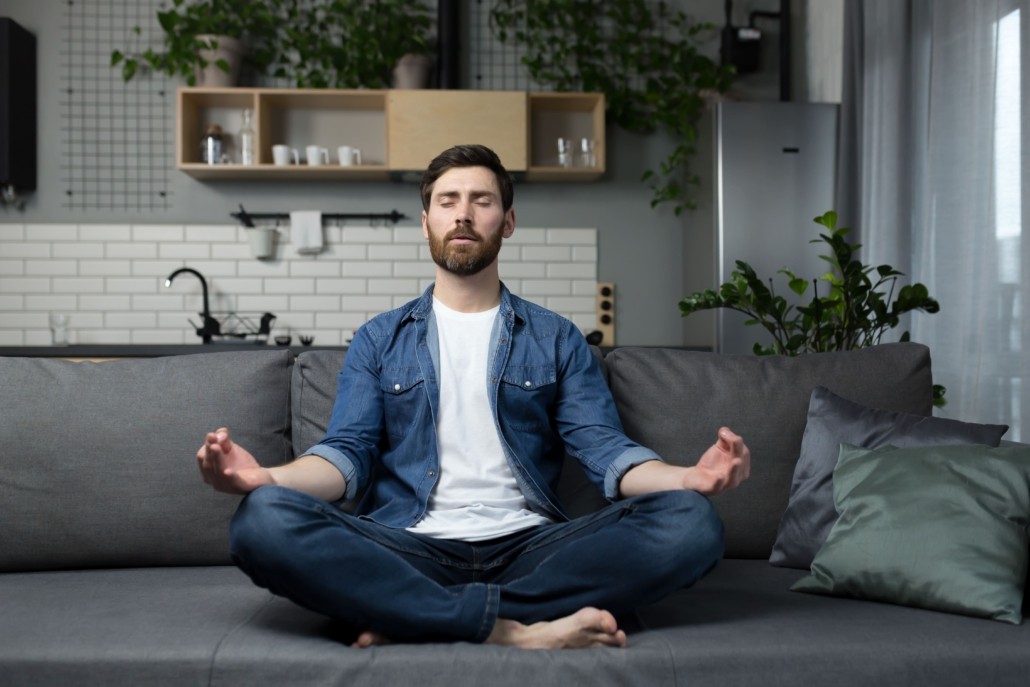
To meditate as a student, sit comfortably, close your eyes, and focus on your breath for a few minutes. When your mind wanders, try to bring it back.

When meditating, you don’t think about anything specific, just observe your thoughts without judging them and focus on your breath.

While you are meditating, don’t pressure yourself, don’t expect a blank mind, and avoid distractions like your phone.

You will know your meditation is working if you feel calmer, more focused, and better able to handle stress over time.

Questions?

We are happy to help!